This winter, we’ve been seeing more signs than usual that parasitoid wasps, natural enemies of aphids, are already working in canola crops across Vic and Southern NSW.
What happens in a canola crop before aphids start building can make a difference for pest pressure later in the season. So with these beneficial insects already active, they could give growers a valuable advantage against aphids this spring.
So, what exactly does that mean for aphid management moving forward, and what can growers do to protect their parasitoids?
Why early matters
Aphids can build quickly in spring when conditions are favourable. Meanwhile their natural enemies, such as parasitoid wasps, need a little extra time to establish and build their populations in response.
This creates a timing challenge for biological control. This lag can give pest populations a window to grow before natural enemies can catch up and bring them under economic thresholds.
We’ve been monitoring a number of canola crops across southern Australia as part of a GRDC-funded project, investigating how we can use parasitoids to reduce this time lag.
But this year, our fieldwork is revealing something particularly encouraging: parasitoid populations are at above-average numbers in Vic and Southern NSW canola paddocks for this time of the year.
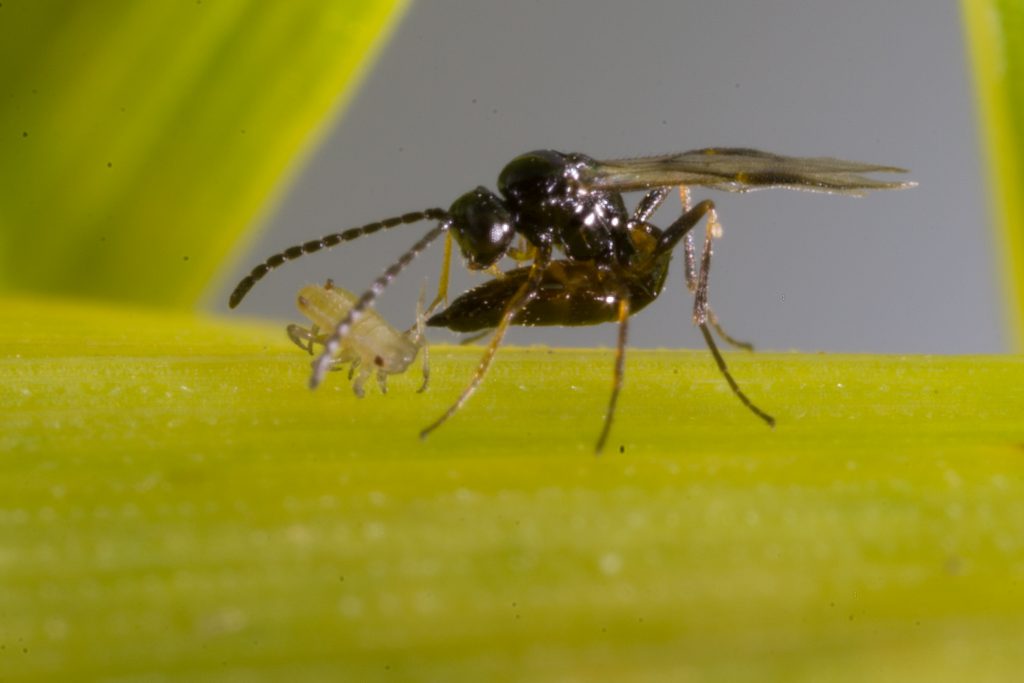
For growers, that could mean more parasitoids are already active in the crop and ready to respond as aphid numbers increase, giving natural biological control a better chance of keeping aphids in check this spring.
What are the signs of beneficials getting a head start?
Every winter since 2024, we’ve surveyed canola paddocks across Northern NSW, Northern VIC, Southern NSW and Southwestern VIC to track aphid and parasitoid activity.
This winter, we’re seeing signs of parasitoid activity that stand out from previous years on two fronts.
Firstly, signs of parasitoid activity are showing up across more paddocks this year. In Northern VIC, Southern NSW and Southwestern VIC, aphid mummies were detected at over 80% of trial sites, compared to numbers as low as 14–30% at a similar time last winter.
This suggests more crops this year may have natural biological control already established, rather than parasitoids needing to build up in spring.
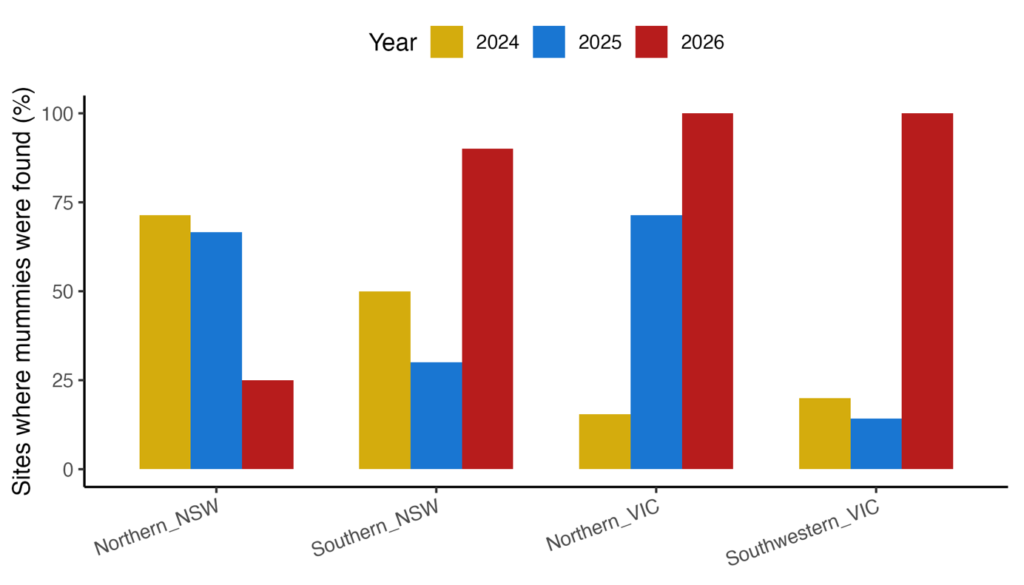
They’re not only showing up in more paddocks this year; within those paddocks, we’re also seeing increased signs of their activity.
Looking specifically at plants where aphids were present, the proportion also carrying mummies has jumped sharply in 2026 compared to the previous two winters.
In Northern Vic mummies were found on 61% of plants with aphids, compared with around 15% last year. Likewise, in Southwestern Vic, mummies were found on around 45% of aphid infested plants, up from less than 5% of plants last year.
In other words, when aphids are present this winter, we’re much more likely to find evidence that parasitoids are already attacking them.
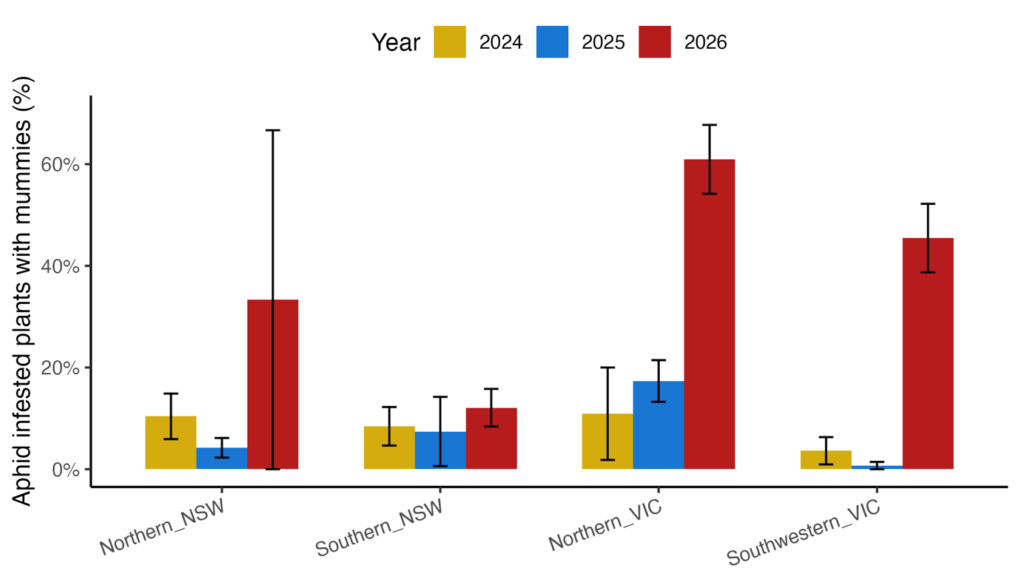
That head start matters. A parasitoid population already established in a paddock over winter means they can start responding as aphid numbers increase in spring, rather than having to catch up once the population has taken off. That small timing difference could be what separates parasitoids keeping pace with an aphid population from being overwhelmed by it.
What can growers do next to protect this head start?
The good news is that protecting this head start doesn’t require doing anything expensive. It mostly requires not doing something that would remove those parasitoids.
1. Monitor aphids and beneficials before you spray.
Monitor aphid numbers and use economic thresholds to determine if they have reached a level that warrants control. At the same time, look for signs that beneficials are already working in the crop, such as aphid mummies.
Mummies are easy to spot with a bit of practice. They can be identified by their swollen, bronze-coloured bodies. You will find them still attached to the leaf, stem, or raceme.
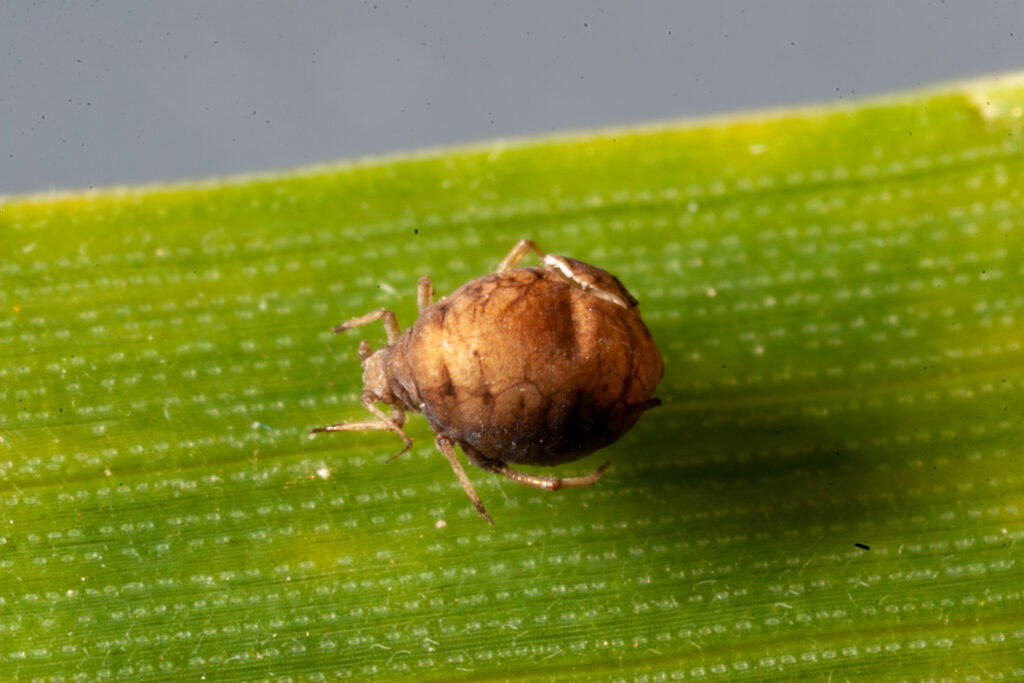
While there are no thresholds for beneficial numbers needed for pest suppression, regular monitoring can give you an indication of how active parasitoids are and how well they may be keeping aphid populations in check.
2. Keep monitoring through spring.
Although winter mummy counts are a promising sign, they don’t guarantee that parasitoids will continue to keep pace with aphids through spring. Seasonal conditions, frost, and paddock management in the meantime will all influence whether this early advantage carries through.
But regular monitoring for both aphids and mummies gives you the best information to manage that transition as it happens.
3. If you need to spray, consider an option that protects parasitoids
Where aphid numbers warrant insecticide control, selecting a product that’s less harmful to parasitoids can help preserve this early population.
Our Beneficials Chemical Toxicity Table is a quick way to check the relative risk of different insecticide options to beneficial insects.
What’s next for our parasitoid project
We’ll be tracking these paddocks through spring to see whether this early parasitoid activity helps keep aphid numbers down when it matters most.
This is just one part of our broader work to improve biological control of aphids in canola. We’re also investigating whether adding commercially reared parasitoids to crops can provide additional control, and when this approach could be most useful.
We’ll share what we find along the way through our field diary series, giving you a look at what’s happening in the paddocks as spring unfolds, which you can follow on our YouTube, LinkedIn, X and Facebook pages.
Resources
For background on the broader project, read our earlier post Can Augmentative Biocontrol Work in Broadacre Crops? What Growers Need to Know or watch this Online GRDC Grains Research Update video.
To find out more about our winter fieldwork this year, give Cesar Australia Field Diaries: putting parasitoids to work a watch
To find out more about the impacts of insecticides on beneficials, see the Beneficials Chemical Toxicity Table
Acknowledgments
Assessing the ecological and economic benefits of controlling aphid pests of canola with parasitoid wasps (CES2307-001RTX) is delivered by Cesar Australia in collaboration with The University of Melbourne, The Crop Capsules Company, Biological Services, and Bugs for Bugs. The project is grateful to the growers and agronomists participating in the project, who have kindly provided access to their properties and their time to support these trials. This initiative is a GRDC investment and includes in-kind contributions from all project partner organisations.