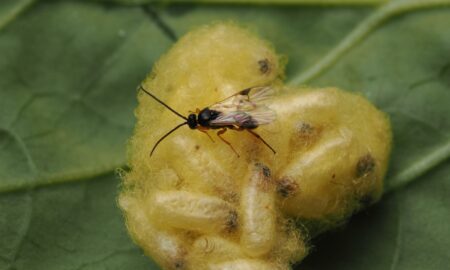
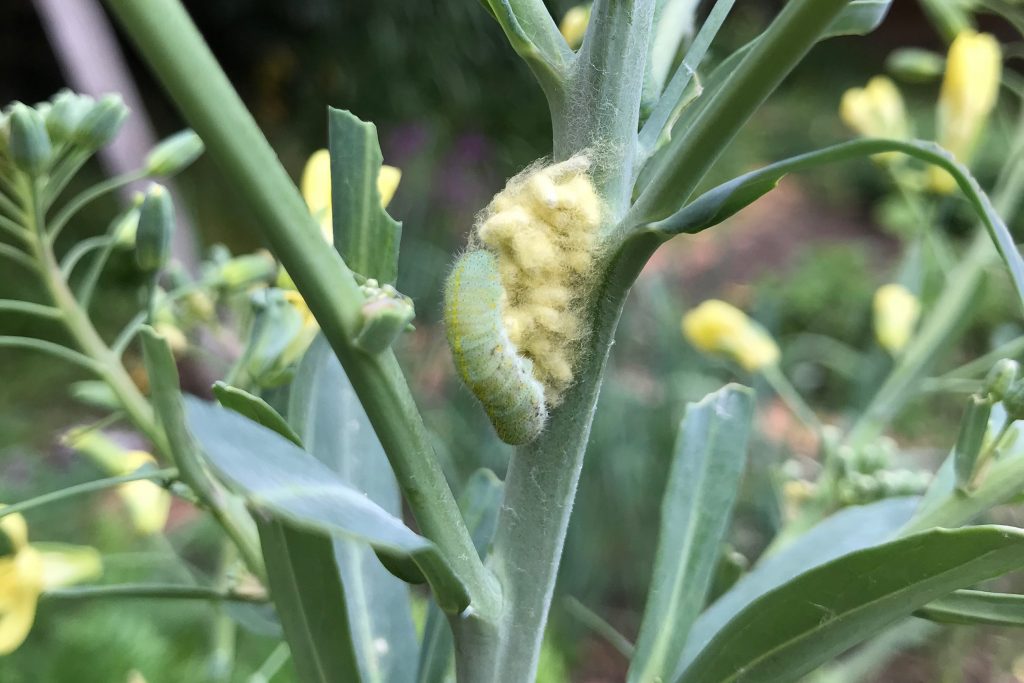
Small, fuzzy cocoon clusters have been spotted in southeastern crops this spring. These are the pupae of parasitoid wasps, most likely Cotesia species.
These tiny wasps attack caterpillars, contributing to the natural suppression of pests in the paddock.
Reports of Cotesia parasitoid wasps are a reminder that pest management doesn’t happen through insecticides alone. Understanding what’s already happening in the crop can help to make more informed decisions about when, and whether, to spray.
Meet Cotesia: the caterpillar parasitoid
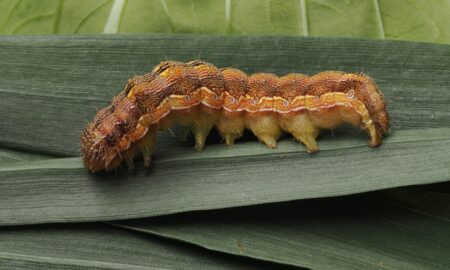
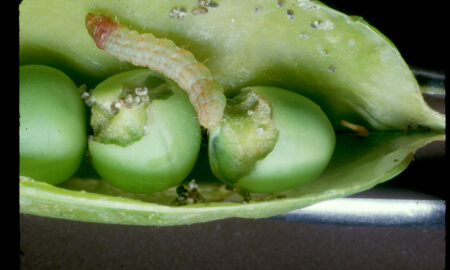
Cotesia is a genus of small parasitoid wasps that attack caterpillars. Female wasps lay multiple eggs inside a suitable host, with armyworm and cabbage white butterfly caterpillars among the species they commonly attack.
These eggs hatch and the larvae develop inside the caterpillar, feeding on it as they grow. A parasitised caterpillar may keep feeding for a short time, but it’s likely to become less active as the wasps develop, and it won’t complete its life cycle. Once the larvae are fully grown, they chew their way out and spin white-yellow, fuzzy cocoons beside the caterpillar’s body. Soon after, the caterpillar dies, while from each cocoon emerges an adult wasp, ready to hunt more caterpillars
Once the larvae are fully grown, they chew their way out and spin white-yellow, fuzzy cocoons beside the caterpillar’s body. Soon after, the caterpillar dies, while from each cocoon emerges an adult wasp, ready to hunt more caterpillars.

Pest control happening in the background
Cotesia wasps are just one example of the beneficial insects that contribute to pest control in agricultural crops. Different parasitoids target different pests, and their activity can contribute to keeping pest populations in check.
For example, Aphidius wasps lay their eggs inside aphids, which eventually become swollen, bronze-brown ‘mummies’. See our recent blog article to find out what aphid parasitoid activity our researchers have been seeing in the field this season.
This activity can be easy to miss. Mummies and cocoons are only visible towards the end of the parasitism process, so they show just a fraction of the parasitoid activity happening in the crop. Many more pests are likely to be parasitised than you can see.
What a spray can disrupt
When a crop looks good and machinery is already passing through the paddock, adding a broad-spectrum insecticide can seem like a relatively inexpensive way to protect against future pest problems.
But broad-spectrum insecticides can harm beneficial insects as well as the target pest. This can mean losing some of the natural control that helps keep pests in check. In some circumstances, disruption of natural enemies can also contribute to pest resurgence or greater reliance on further interventions.
An unnecessary spray therefore doesn’t just cost the product and application. It may also cost you the pest suppression already working in the crop.
Before you spray, monitor for pests and beneficials to help make more informed insecticide decisions.
Before adding a broad-spectrum insecticide to a spray pass, consider:
- Is treatment justified? Assess pest numbers, crop damage and relevant management thresholds rather than spraying because the opportunity is there.
- Are beneficials active? Look for parasitoid cocoons, aphid mummies and other signs of natural enemies.
- Could you reduce the impact? If treatment is warranted, use the beneficials chemical toxicity table to compare the effects of insecticides on beneficial insects.
Cover image: Photo by Julia Severi, Cesar Australia