Key takeaways
- Helicoverpa armigera moths and larvae have been reported in the southern NSW this spring, as far south as the Riverina.
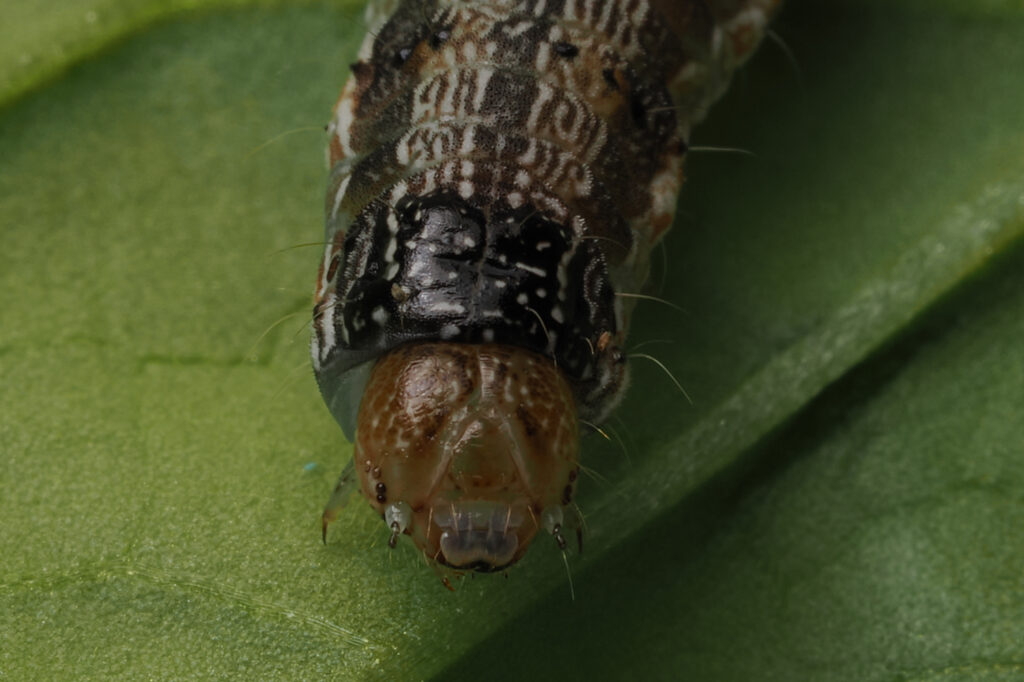
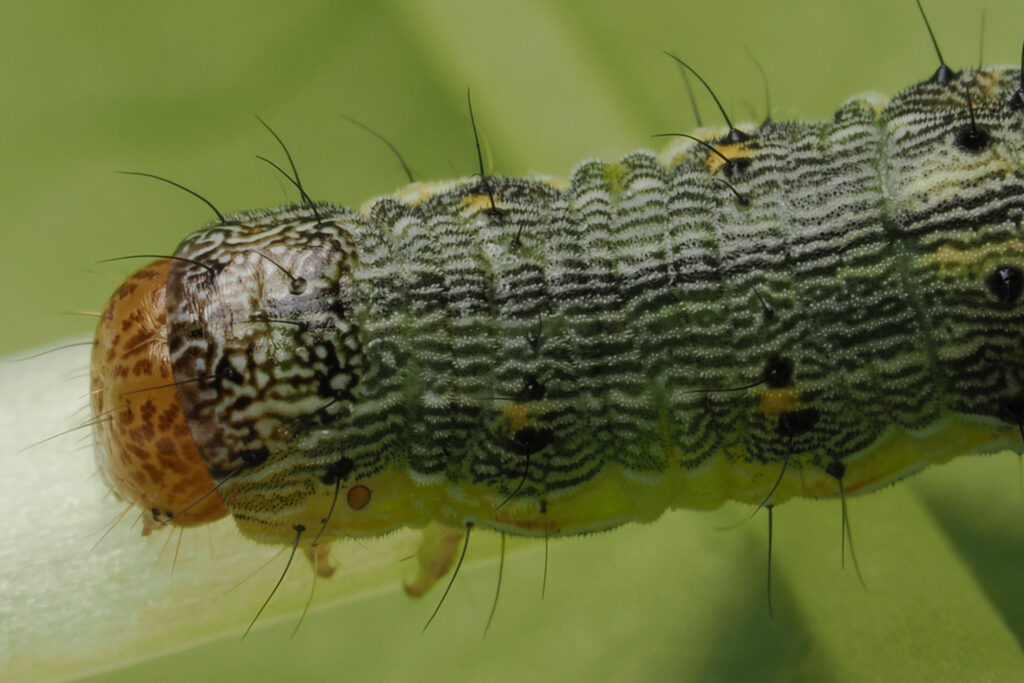
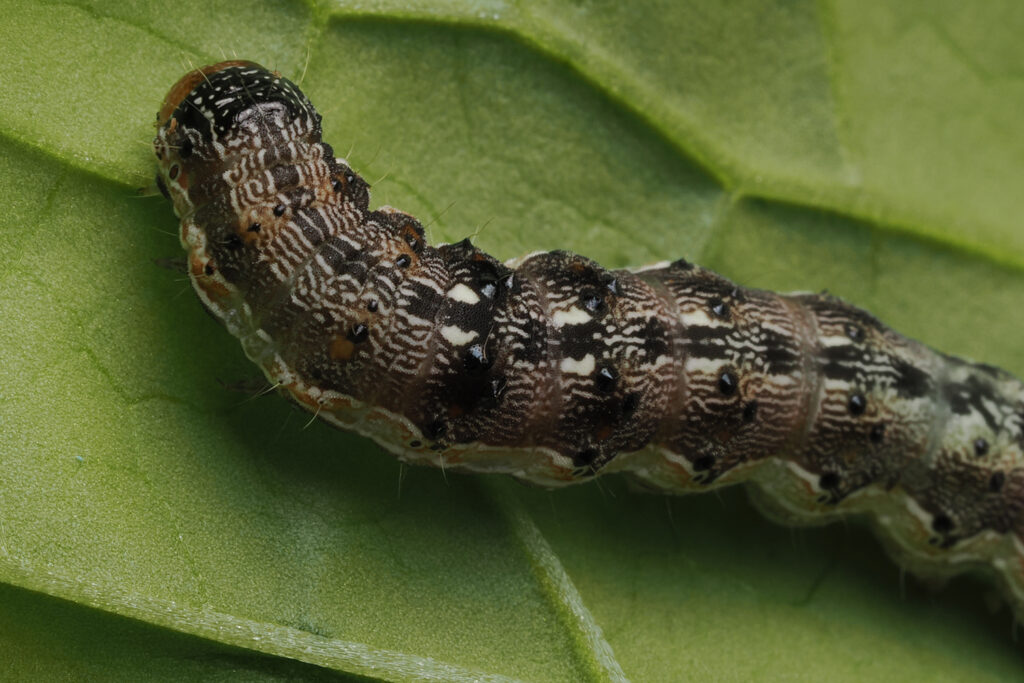
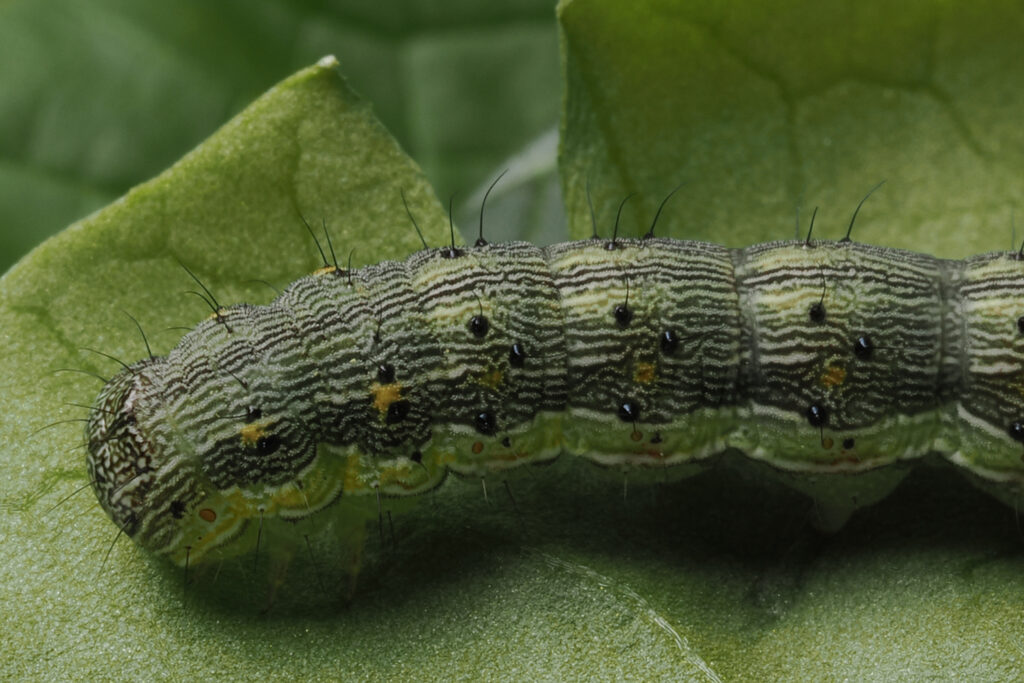
- Black hairs behind the head of larvae indicate H. punctigera, while white hairs indicate H. armigera. A dark saddle on the fourth body segment also points to H. armigera, but it can be faint or absent.
- If H. armigera is present alongside H. punctigera, refer to the Helicoverpa armigera resistance management strategy for control advice; H. armigera has evolved moderate-to-high resistance to synthetic pyrethroids.
Managing Helicoverpa (also known as Heliothis) during spring is not one-size-fits-all in Victoria and southern NSW.
While Helicoverpa punctigera, is the main species of concern in these regions, some areas are also encountering the closely related and almost identical Helicoverpa armigera. This can complicate management, as H. armigera has evolved resistance to insecticides, whereas H. punctigera has not.
Here we describe areas of the southeast encountering both Helicoverpa species this season, how to distinguish Helicoverpa larvae, and what the presence of H. armigera means for management this spring.
Reports of H. armigera in southern NSW
There is evidence that H. armigera moths and larvae are present alongside H. punctigera as far south as the NSW Riverina this season.
Pheromone traps operated by NSW Local Land Services have revealed the presence of H. armigera moths in September and October in their southernmost trap in Wagga Wagga. Similarly, agronomists near Lochart captured H. armigera moths in a local pheromone trap during late September.
In mid-October, we received a sample of large H. armigera larvae from a canola crop near Griffith, NSW.
H. armigera larvae have also been reported in high numbers in crops near Tottenham and Wellington in central NSW.
To date, we haven’t had reports of H. armigera in Victoria this spring.
Why are H. armigera larvae in the Riverina?
Helicoverpa punctigera is usually the key pest species in southern NSW and Victoria for advanced pulse and canola crops in spring, not H. armigera.
That’s because H. punctigera arrives first in these cropping regions, typically during August and September. During winter, H. punctigera breeds in the arid inland of Australia on ephemeral native vegetation. Eventually, these plants senesce and these moths, which can migrate vast distances, arrive in Victoria and southern NSW.
In contrast, in the southeast, H. armigera doesn’t typically appear in large numbers until spring temperatures have warmed enough, when they emerge locally from overwintering pupae. By then, winter-sown crops in many areas of the southeast are usually dried out or harvested.
While we expect central and northern areas of NSW to encounter H. armigera larvae in maturing crops in spring, reports of large H. armigera larvae as south as the NSW Riverina by mid-October is unusual.
These populations may have arisen from migrations from northern cropping regions where large moth numbers have been observed. While H. armigera are not as migratory as H. punctigera, they still can fly long distances. And as there are areas in the northern cropping regions where H. armigera emerge early in spring or even persist year-round, there could be some migration from north to south.
It’s also possible that with the warmer-than-average winter and early spring, H. armigera could emerge from pupation earlier than usual, or if migrant moths arrived, conditions have been warm enough for eggs to hatch and larvae to grow.
How to tell the difference between species
With some uncertainty as to how far south H. armigera will have a presence in winter-sown crops this spring, it’s worth inspecting larvae for some key features.
There are two features to look out for when distinguishing H. punctigera larvae from H. armigera:
- The colour of the hairs in the first row after the head capsule. H. punctigera has black hairs, whereas H. armigera has white hairs. You will require a hand lens or macro camera lens to view this feature.
- The dark ‘saddle’ on the fourth body segment on H. armigera. This is absent on H. punctigera (though sometimes the dark saddle can be absent or diminished on H. armigera).
What to do if H. armigera is present
If you have mixed populations of H. punctigera and H. armigera and control is warranted, then it’s important to refer to the ‘Resistance management strategy for Helicoverpa armigera in Australian grains’, to help select an insecticide that will be efficacious.
While synthetic pyrethroids are commonly used for H. punctigera control, H. armigera has evolved to resistance to this insecticide group at moderate to high levels.
While the resistance management strategy has been developed for the northern growing region, southern growers can refer to table 2, page 2. for best practice product windows and use restrictions to manage insecticide resistance in H. armigera. Keep in mind that both Helicoverpa species are best controlled while they are small – up to 7 mm in length, and that individuals can evade sprays if they are entrenched in pods.
Cover image: Photo by Julia Severi, Cesar Australia