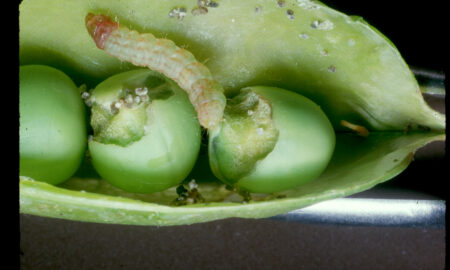
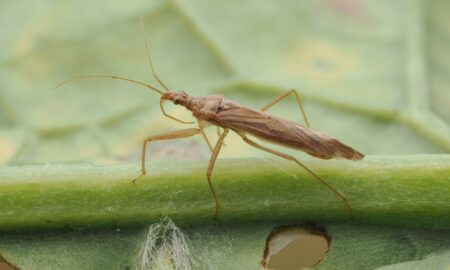
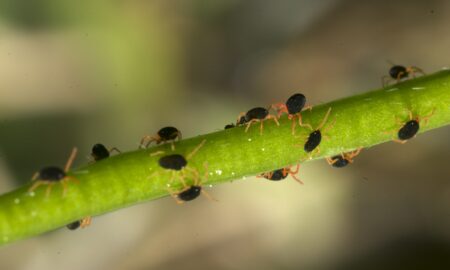
Pestfacts Southeastern
 Key takeaways
- Pasture webworm and cutworm larvae have been feeding on young barley and wheat crops in the NSW Riverina and Central West Slopes and Plains.
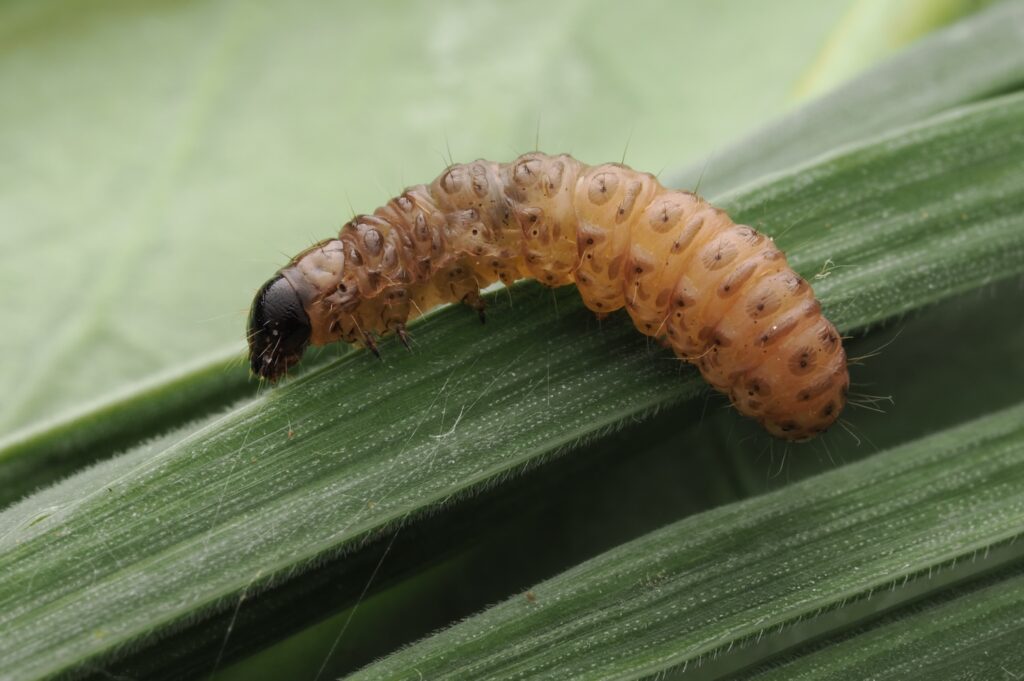
- Pasture webworm larvae have dark raised patches and stay under 18 mm; cutworm larvae are duskier, featureless, and grow up to 40 mm.
- Both are establishment pests, so risk eases once the crop advances; chemical control isn’t always warranted, weigh up damage extent first. Where spraying is needed, spot spraying limits impact on beneficial insects.
If you are finding cut leaf blades and stems in cereals at this time of year, you may think it is cutworm (Agrotis sp.) at first.
While that may be right, pasture webworm (Hednota sp.) feeding has also been seen recently, and the damage can look similar.
With recent reports of both insect types, this article covers what’s been seen, identification tips and management advice.
What’s been reported?
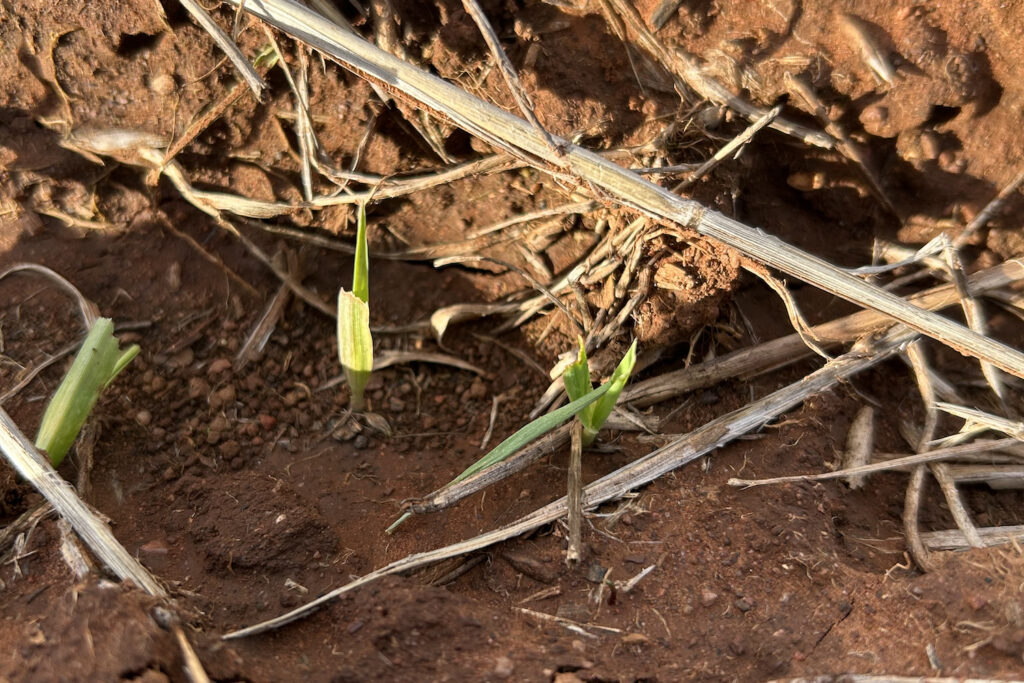
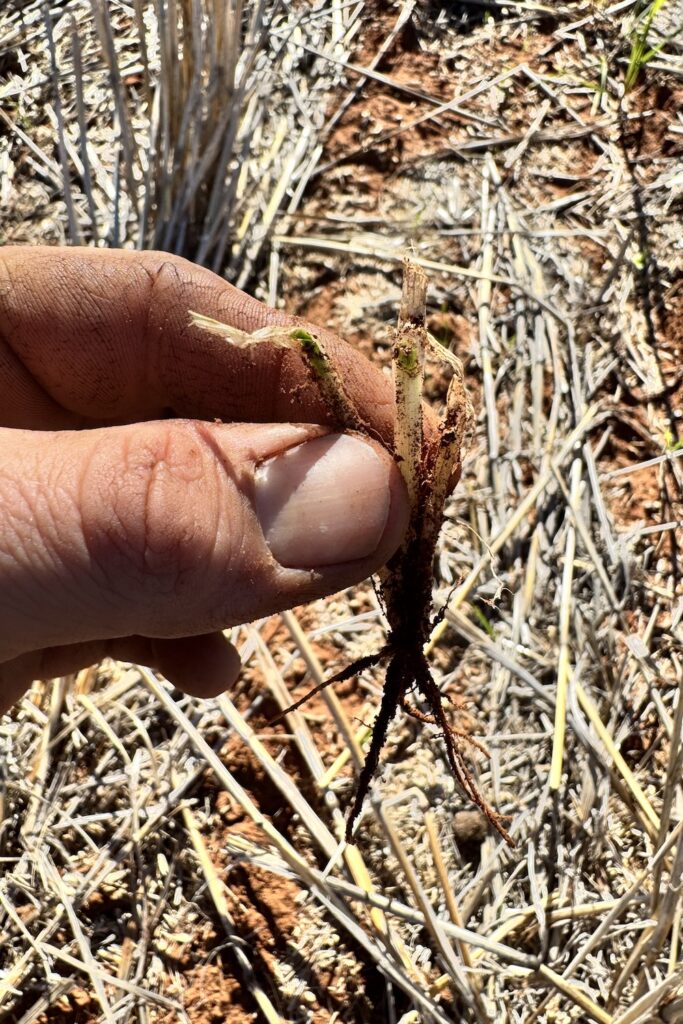
Pasture webworm (Hednota sp.) larvae have been discovered in a young barley crop near Tomingley in the NSW Central West Slopes and Plains. Damage was noticed first, with small plants showing chew marks on leaves, and some plants eaten down to ground level.
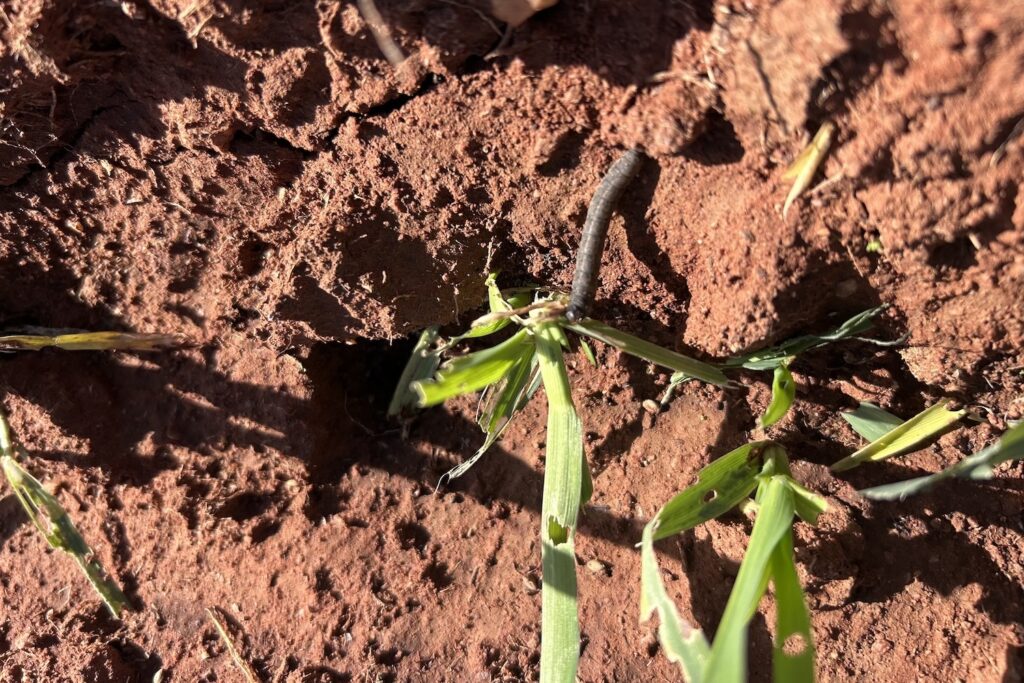
A second report, from further northwest near Girilambone, describes another paddock of young barley that has sustained severe damage from a species of cutworm. We have received a sample to determine whether the species is the Bogong moth (Agrotis infusa), an important keystone species in Australia that we reported on earlier in the year.
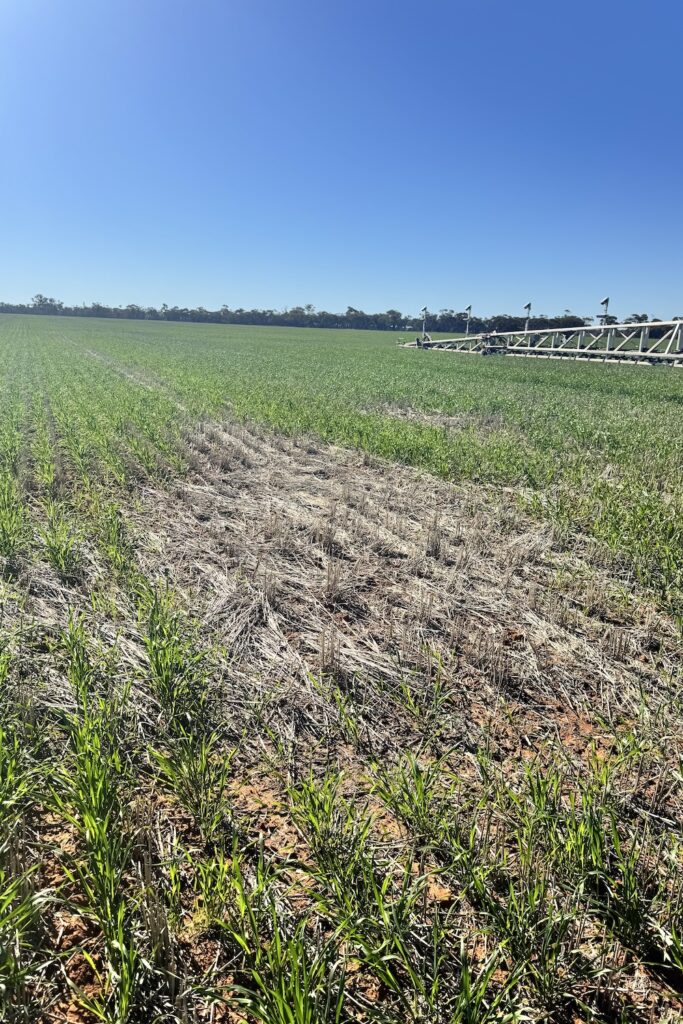
The two pests have also turned up together: in Hillston, in the NSW Riverina, pasture webworm and cutworm larvae have been found side by side in wheat paddocks showing large patches of feeding damage.
Pasture webworm vs cutworm
As moth larvae that can feed on establishing cereals, cutworm and pasture webworm are often confused with one another, but there are a few key features to help tell them apart.
Appearance
The body of pasture webworm larvae can be white to cream or brown in colour, with long, fine hairs protruding from large, dark raised patches. Sometimes their body may have a tinge of green showing through after eating foliage. Pasture webworm is a small moth species, and larvae grow to no more than 18 mm.
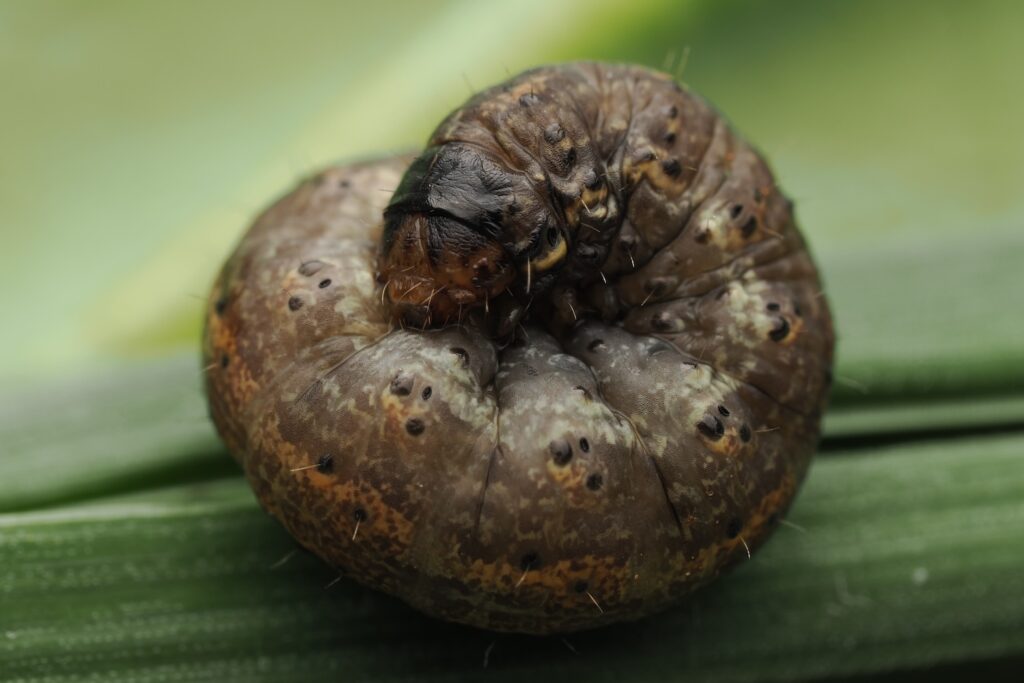
Cutworm larvae are plumper and duskier in appearance. They are relatively featureless without the obvious dark patches seen on webworm, and their body hairs are relatively shorter. Cutworm is a larger moth species, with larvae growing up to 40 mm in length.
Behaviour
Cutworm larvae are mostly active in the late afternoon and at night, when they feed primarily at ground level. During the day they can hide under clods of soil or bury themselves in the ground near the base of plants.
Pasture webworm larvae create web-lined tunnels in the soil. They emerge at night to feed, often cutting off leaf blades and dragging them into their tunnels. This distinctive behaviour can provide a useful clue when investigating crop damage: look for tunnel entrances near damaged plants, particularly if cereal leaves or grass blades are protruding from the entrance. They will also climb onto plants to feed, primarily at night, sometimes leaving webbing behind.
Management considerations
Cutworm and pasture webworm are night-active, so their presence in a paddock can be more obvious after dark. If monitoring during the day, the area around plants with chewing damage may need to be dug up to reveal their presence.
The presence of either species alone does not necessarily mean chemical control is required. Both are establishment pests, so the risk of damage wanes once the crop advances. Consider the extent and distribution of the crop damage, and whether the crop is growing away from the feeding pressure.
There are several broad-spectrum insecticides registered for cutworm and pasture webworm if necessary; however, these will impact beneficial insects. Where infestations are patchy, spot spraying should be enough to control these species, reducing insecticide use and conserving beneficial species in unsprayed areas. Spraying in the late afternoon or early evening may also improve the chance of contact with these night-active pests.
It is worth knowing whether you have pasture webworm or cutworm before you spray. Depending on the product, some actives recommend a higher rate for larger cutworm larvae, compared to the rate specified for pasture webworm or small cutworm larvae.
Want more information?
Cutworm, PestNotes, Ceasr Australia and SARDI
Pasture webworm, PestNotes, Ceasr Australia and SARDI
Acknowledgements
This article was authored by Julia Severi, with input from Lilia Jenkins, Cesar Australia. Thanks to Erika Grant and Brian Marchant, Agnvet, and Aaron Hutchison for sending in samples.
Cover image: Image by Aaron Hutchison