Pestfacts Southeastern
 Key takeaways:
- Seasonal and predicted conditions suggest some regions could face an increased risk of diamondback moth this spring.
- Warm, dry weather may favour faster population growth.
- Start monitoring canola for diamondback moth from stem elongation.
- Diamondback moth has evolved resistance to several insecticides; refer to the best management practice guide for further information.
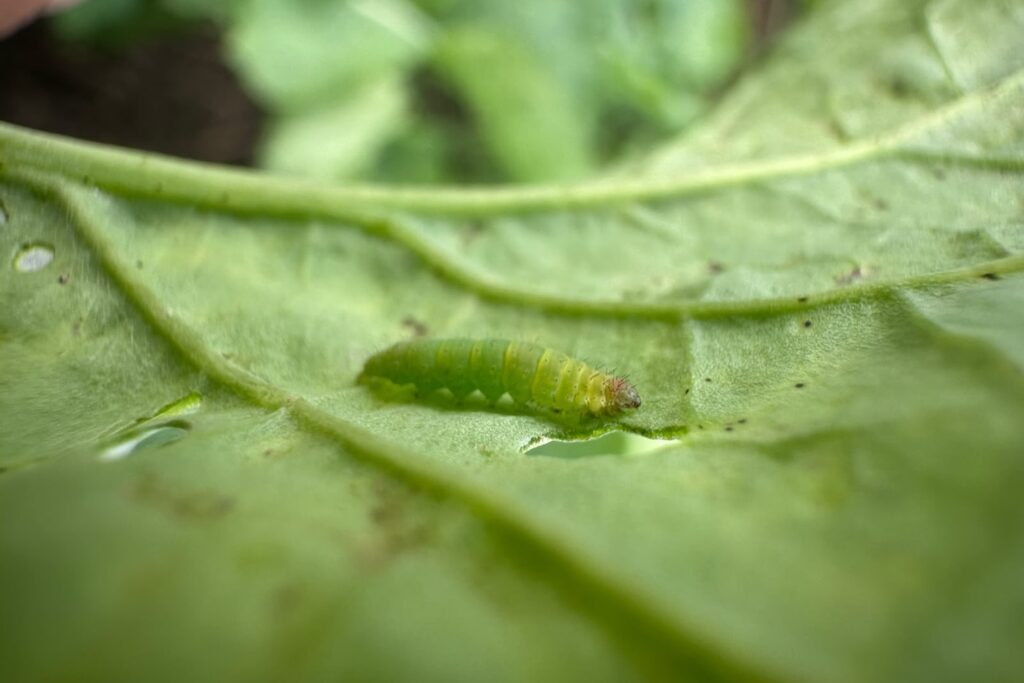
Diamondback moth (Plutella spp.) activity has been reported by agronomists in Victoria’s Northern Country and the NSW Riverina this winter.
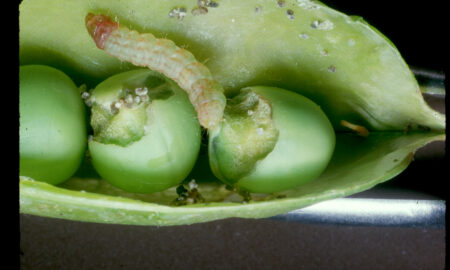
Most years, canola can withstand considerable foliar feeding damage by diamondback moth larvae. However, spring outbreaks can happen, resulting in severe defoliation and chewing damage to flowers and pods.
Recent and predicted seasonal conditions are hinting at the potential for outbreaks. To understand your risk this spring, here’s five things to know about diamondback moth in canola.
High pre-season rainfall creates green bridges for diamondback moth
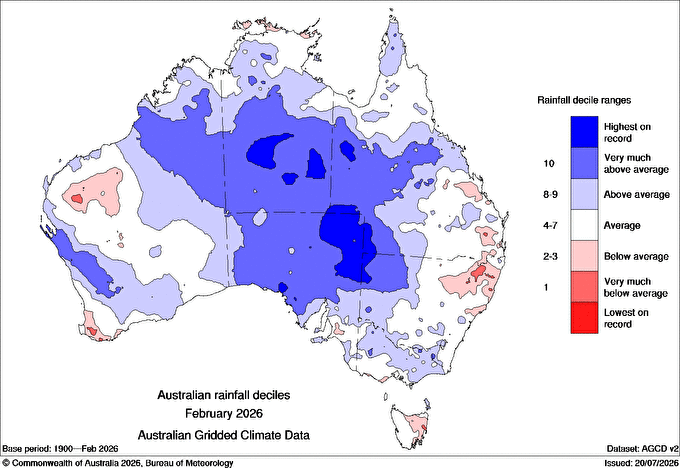
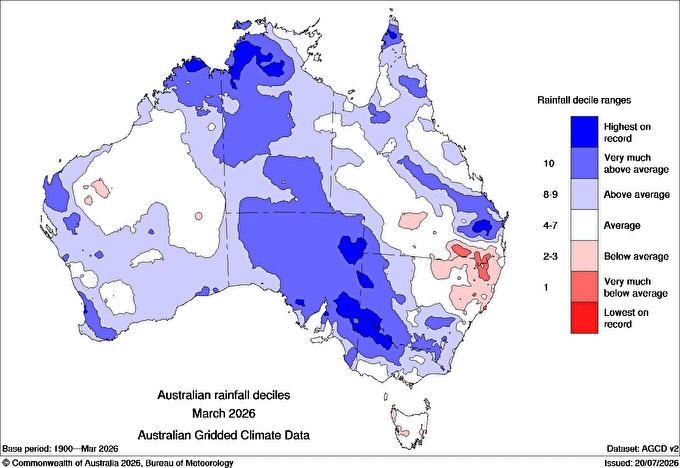
Above average rainfall between February–April can increase diamondback moth risk by creating a brassica green bridge. These volunteer brassicas and weeds support diamondback moth outside of the winter-cropping season by providing food and breeding sites.
Several cropping regions in Victorian and southern NSW recieved above average rainfall in February and March (Figure 1).
Dry and warm in-season conditions increase diamondback moth populations
Prolonged periods of dry weather during the growing season elevates the risk of diamondback moth for autumn-sown canola.
Rainfall can help kill diamondback moth larvae, through dislodging, drowning and/or exposure to fungal pathogens.
June saw some good rainfall in many (but not all) cropping regions of southeastern Australia. However, forecasts indicate below average rainfall during August and October. If these drier conditions do develop, more diamondback moth larvae are likely to survive
Prolonged periods of warm weather also increase the risk of diamondback moth damage. The development rate of diamondback moth is closely linked to temperature. At 12°C, the lifecycle takes more than 100 days, whereas at 28°C the diamondback moth lifecycle takes only 14 days.
If the warmer-than-average seasonal conditions we’ve had continue for the rest of winter and into spring (as they are predicted to), this could increase the risk of diamondback moth damage as populations build more rapidly.
Monitoring is key
Though forecasts hint at favourable conditions for diamondback moth outbreaks, we can’t predict how this season is going to progress. The sound approach is to monitor canola crops to detect populations before they reach damaging levels.
From stem elongation onwards:
- Monitor canola crops every two weeks, using a sweep net
- Take five sets of ten sweeps in different locations around the paddock.
- Average the number of larvae across all samples.
Economic thresholds vary with the crop growth stage, as older canola crops can tolerate higher numbers of larvae. Whether or not the crop is stressed will also affect the crops’ tolerance. These are the thresholds to help guide whether spraying is warranted:
- Rosette stage >50 per cent leaf area damaged
- Pre-flowering crops (stressed) >30 larvae/10 sweeps
- Pre-flowering crops (unstressed) >50 larvae/10 sweeps
- Early-mid flowering >50 larvae/10 sweeps
- Mid-late flowering >100 larvae/10 sweeps
- Pod maturation >200 larvae/10 sweeps
Insecticide resistance must stay front of mind
Not all insecticides will provide effective control. Diamondback moth has evolved resistance to several insecticides and can require a two-spray approach for management.
For detailed recommendations on chemistry efficacy and a resistance management strategy, refer to the ‘Diamondback moth: best management practice guide’ pages 2 and 10.
Beneficials will target diamondback moth
Natural enemies of diamondback moth can also help to suppress populations.
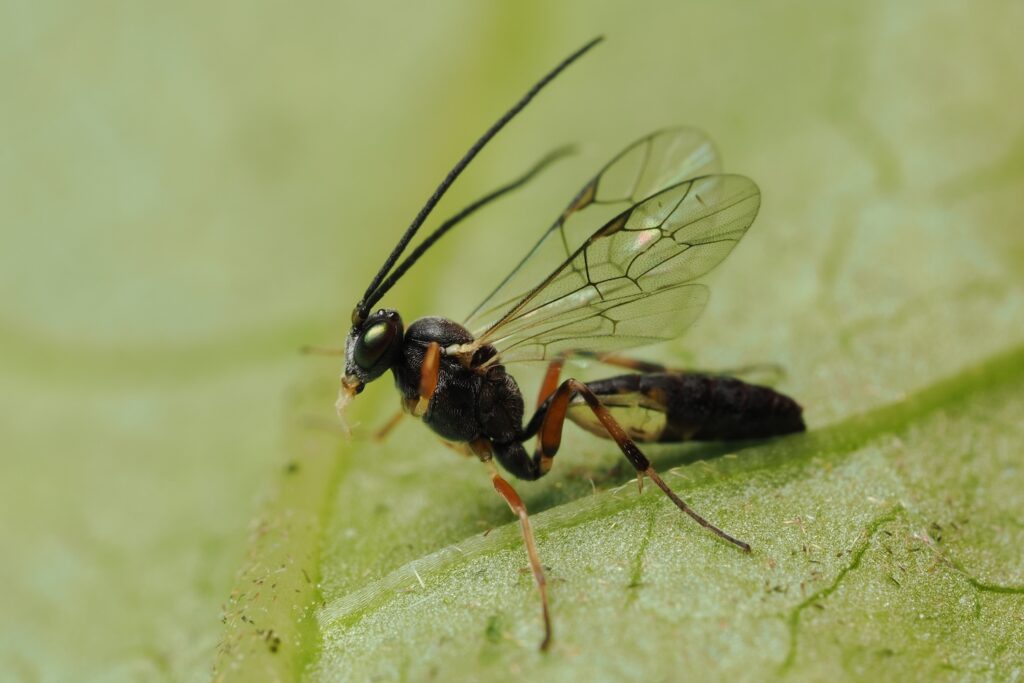
These include small parasitic wasps such as Diadegma semiclausum, which lays its eggs in the larvae of diamondback moth, stopping its development before it can mature into a moth.
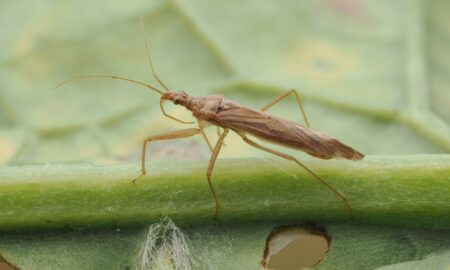
Larvae and eggs will also be preyed upon by generalist predators such as lacewings.
Want more information?
If you are unsure if you have diamondback moth, please reach out to our team for identification help.
Further information:
Diamondback moth: best management practice guide, GRDC
Diamondback moth, PestNotes, Cesar Australia and SARDI
Tactics to manage diamondback moth, GRDC Groundcover
Acknowledgements
This article was authored by Julia Severi and Lilia Jenkins from Cesar Australia.
Cover image: Photo by Julia Severi, Cesar Australia