Pestfacts Southeastern
 Key takeaways
- Cutworm populations have been reported in North Central and North East Victoria, with at least one case severe enough to require pasture resowing.
- There are multiple species of cutworm, but identification is difficult in the field. Samples can be sent in for identification.
- Large larvae found now are likely to pupate soon, so further feeding damage is expected to be limited.
Cutworm reports have been coming in from North Central and North East Victoria during late March and April.
While large larval numbers and feeding damage is evident in some cases, identifying which species responsible is not straightforward in the field.
This article covers what has been reported this season, why cutworm identification is complicated, and what growers should consider given that large larvae are likely to pupate soon.
Recent reports of cutworm
During late March and April, we received reports of cutworm from North Central and North East Victoria, with impacts ranging from minor to significant establishment damage
Near Shepparton, high numbers of large larvae were observed around a farm gateway.
Southeast of Wodonga, an adviser described an outbreak of large cutworm larvae in newly sown pasture that had to be resown due to feeding damage.
North of Bendigo, low levels of large cutworm and pupae were found in a paddock of early-sown barley, which had large areas of feeding damage.

One name, multiple species
“Cutworm” refers to the larvae of moth species in the genus Agrotis. Several of these species can sporadically feed on a wide range of agricultural crops, including canola, cereals and pulses.
In southeastern cropping regions, the term cutworm includes native species, such as the Bogong moth (Agrotis infusa) and the brown cutworm (Agrotis munda), sometimes called pink cutworm.
The Bogong moth is a keystone species in the Australian Alps and an important food source for the critically endangered Mountain Pygmy-possum.
Another cutworm species is the invasive, black cutworm, (Agrotis ipsilon), an introduced species in Australia that is found worldwide.
Species identification and management implications
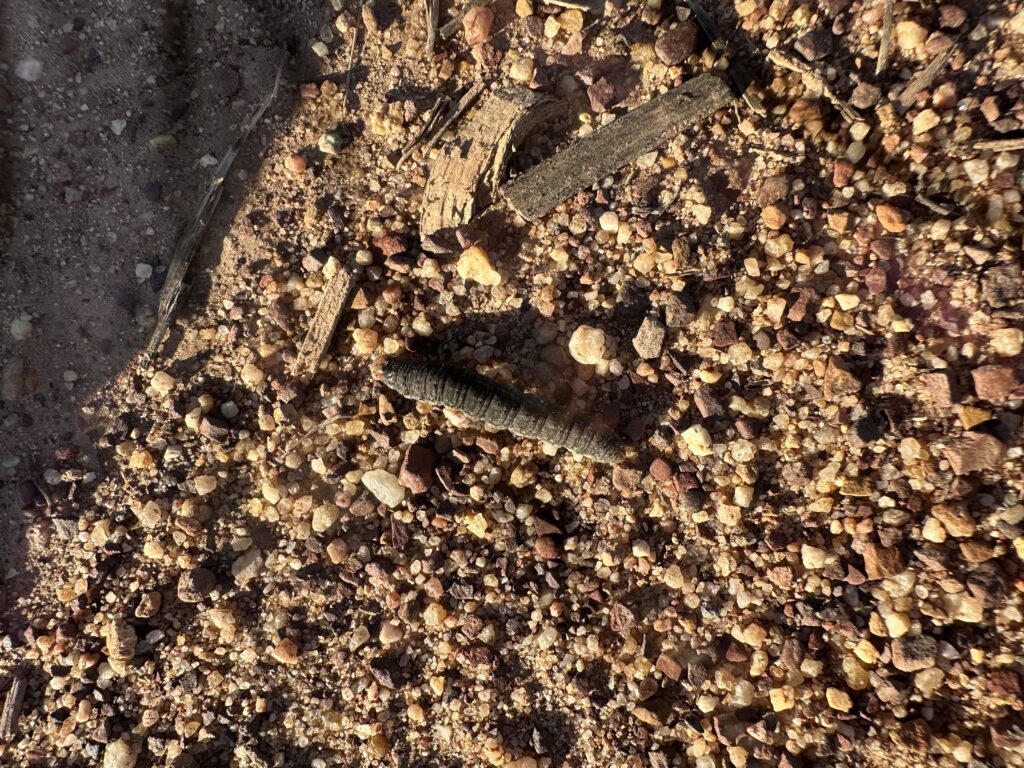
As larvae, Agrotis spp. grow to about 40-50 mm long and are relatively hairless, with a distinctly plump and greasy appearance. But identifying to species can be tricky.
The common names of cutworm can be misleading. With dark or black larvae, like the cutworm reported this season, colour is not enough alone to identify the species because like black cutworm, bogong moth larvae are also very dark in colour.
While it is not possible to distinguish between bogong moth and black cutworm in-field, identification does not usually change immediate management decisions
However, the bogong moth is a native species with significant ecological importance. So, we encourage you to send in a sample to our Pestfacts Southeastern service for identification. We can rear the larvae to the adult stage, at which point we can tell them apart.
This information can help grow our understanding of the lifecycle and seasonal occurrence of these different species, and which are most commonly responsible for economic damage to agricultural crops and pastures.


Assessing cutworm risk this autumn
If you have been finding large cutworm larvae (~40 mm) in your paddocks this autumn, they will likely pupate soon, if they haven’t already.
That means the immediate risk of further feeding is declining.
Cutworm is generally a concern for crops or pastures in vulnerable early growth stages, such as newly sown paddocks with slow establishment.
Adult moths do not cause crop damage, and any new larvae from subsequent egg-laying may reach their final instar (when they are most voracious) when plants are more established and better able to tolerate feeding. Particularly if this season’s early autumn rainfall helps crops to establish and advance rapidly.
To be cautious of any further cutworm presence and activity, check crops from emergence through to establishment. Larvae are mostly active at night and late afternoon. During the day they can hide under clods of soil or bury themselves in the soil. Check the base of recently damaged plants and the healthy ones around them by scratching the soil surface.
Authors
This article was authored by Julia Severi and Lilia Jenkins from Cesar Australia.
Cover image: Image by Chris Dunn