
Green peach aphid insecticide resistance maps
Decision aid tool
Photo by Andrew Weeks, Cesar Australia
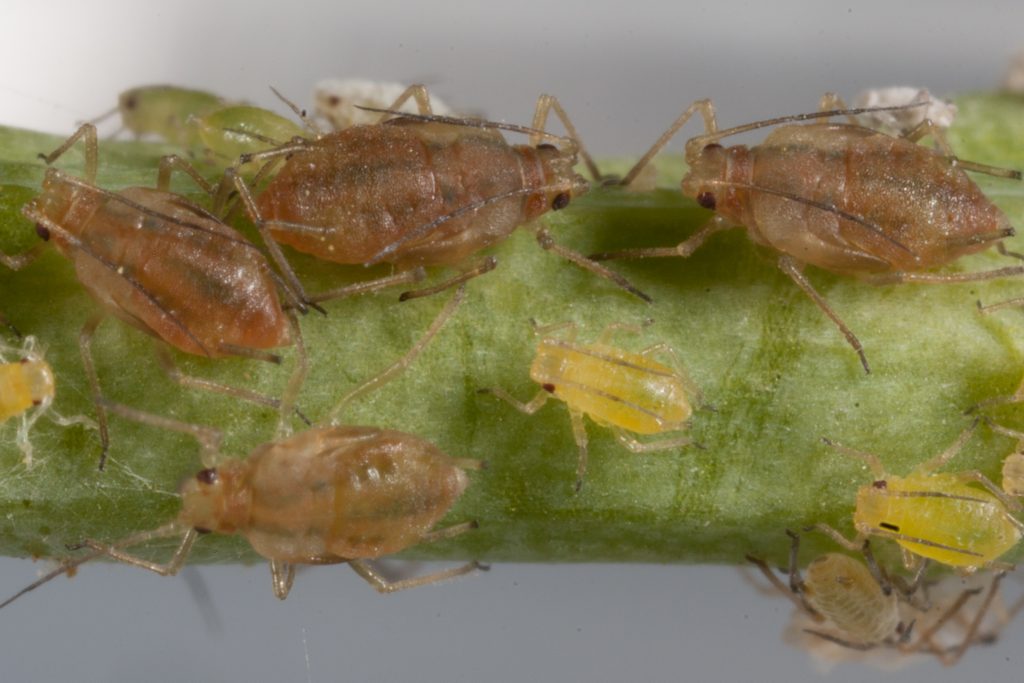
The green peach aphid (Myzus persicae – GPA) is known worldwide for its ability to evolve resistance to insecticides. In Australia, GPA has resistance to the following chemical Mode of Action (MoA) groups:
- Carbamates (MoA Group 1A – e.g. pirimicarb)
- Organophosphates (MoA Group 1B – e.g. dimethoate)
- Synthetic pyrethroids (MoA Group 3A – e.g. alpha-cypermethrin)
- Neonicotinoids (MoA Group 4A – e.g. imidacloprid)
- Sulfoximines (MoA Group 4C – sulfoxaflor)
- Tetronic and tetramic acid derivatives (MoA Group 23 – e.g. spirotetramat)
Resistance to carbamates, organophosphates, synthetic pyrethroids and neonicotinoids is widespread and very common throughout Australia. Resistance to these chemical groups can be assumed in most cropping situations.
By contrast, resistance to Group 4C and Group 23 insecticides has been detected in many regions across Australia, although many GPA populations screened have not shown resistance. The following maps display the resistance status of GPA populations screened by Cesar Australia for these two chemical groups, presented by Local Government Area (LGA).
Areas on these maps which appear white are regions where no samples have been tested and should be treated as having an unknown resistance status. A lack of data should not be interpreted as an absence of resistance in that region.
Resistance to sulfoximines (Group 4C – sulfoxaflor)
Sulfoxaflor is registered for the control of GPA in a variety of grain and horticultural crops in Australia.
Low-level resistance to sulfoxaflor has been detected across multiple regions of Australia, but remains far less common than resistances to older insecticide groups. Cesar Australia periodically screens GPA populations for resistance, with results up to and including 2026 presented in the following interactive map.
Zoom in on your region to view sulfoxaflor resistance results. Green indicates where no resistant populations have been detected, orange indicates where one or more resistant populations have been detected, and grey indicates where resistance status could not be determined from the tests conducted.
Resistance to tetronic and tetramic acid derivatives (Group 23 – spirotetramat)
Spirotetramat is the only Group 23 insecticide registered for the control of GPA in Australia. It is registered for this use in a range of vegetable and fruit crops. Additionally, there is a minor use permit available for spirotetramat against GPA in lentils (PER95202 – expiring 31st May 2027). Always check permits for jurisdictions and expiration dates on the AVPMA website prior to making spray decisions.
Resistance to spirotetramat has been documented in GPA populations in several Australia states but remains relatively rare. Cesar Australia regularly screens populations for this resistance, with results up to and including 2026 presented in the following interactive map.
Zoom in on your region to view spirotetramat resistance results. Green indicates where no resistant populations have been detected, orange indicates where one or more resistant populations have been detected, and grey indicates where resistance status could not be determined from the tests conducted.
What does resistance mean for the management of GPA?
Widespread resistance to many insecticides can make GPA management decisions difficult. Sulfoxaflor and spirotetramat remain viable options in many situations, where registered, however understanding local resistance status is important.
Other registered insecticide options, such as afidopyropen, flonicamid, pymetrozine and dimpropyridaz, remain effective chemistries for GPA control in Australia, but should be used judiciously to help preserve their effectiveness. Always follow label or permit directions and rotate between MoA groups.
For canola growers, the Green Peach Aphid Best Management Practice Guide is available to support on-farm management.
Insecticide resistance testing
Cesar Australia offers an insecticide resistance testing service for growers at no additional cost, other than postage. This service is supported through investment from the Grains Research and Development Corporation (GRDC). Results from samples submitted by growers also help keep national resistance maps up to date.
If you experience a chemical control failure, suspect insecticide resistance in your paddock, or want to learn more about resistance in your region, follow the instructions in this form.
Acknowledgements
These maps and the resistance testing service are provided by Cesar Australia through GRDC investment CES2501-002RTX. We also acknowledge the support of the many agrochemical companies who have contributed to work, including Corteva Agriscience and Bayer Australia.
- Published
- Categories
- Integrated pest management, Resistance