A new resource for Australian vegetable growers and advisers will make it easier to compare the potential impacts of insecticides on beneficial insects, helping them protect beneficials when making crop protection decisions.
Making crop protection choices that support beneficials
Beneficial insects (and mites) play an important role in keeping pest populations under control in vegetable crops. Whether they occur naturally or have been introduced through commercial releases, these natural enemies provide an important line of defence against crop pests.
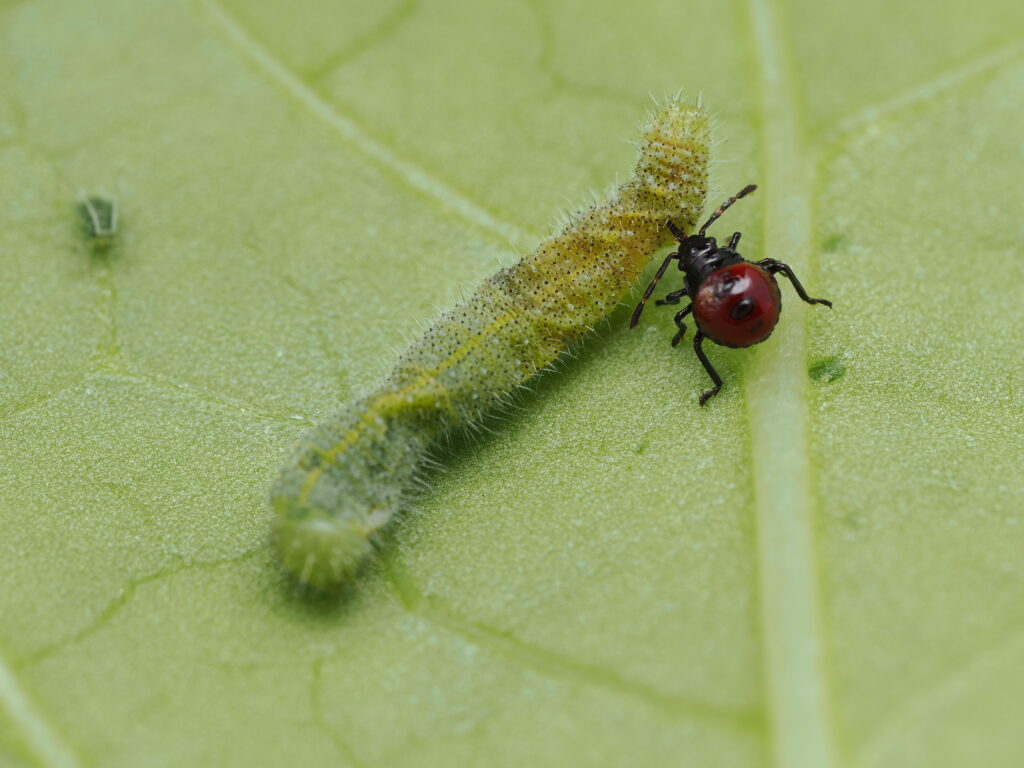
Alongside beneficial insects, crop protection products, such as insecticides and miticides, are an important pest management tool. However, some products can have greater impacts on beneficials than others, potentially disrupting the natural pest control they provide.
The good news is that factoring beneficials into your decisions doesn’t mean changing your whole approach to pest management. It can start with one simple step: checking the potential impact of insecticides on beneficials before choosing a product.
A new resource for the Australian vegetable industry
The Beneficials Chemical Toxicity Table for vegetable crops, developed by Cesar Australia, provides a single, easy-to-use reference to compare the effects of different foliar insecticides, registered for use in a range of vegetable crops, on beneficials that are most important to the industry. Ratings are based on independent laboratory testing undertaken by Cesar Australia and available existing research data.
The Beneficials Chemical Toxicity Table for vegetable crops is an outcome of the Australian Grains and Horticulture Pest Innovation Program, a strategic levy investment under the Hort Innovation Vegetable and Frontiers Fund, with co-investment from The University of Melbourne, Cesar Australia, the Grains and Research Development Corporation, and contributions from the Australian government.
How to read the table
First, start with the pest and the label.
Identify insecticides that are registered for use on your crop and suitable for controlling your target pest. Always refer to product labels.
Then, use the table to compare toxicity ratings.
Find those insecticides in the table and compare their colour-coded ratings across different beneficial groups.
The traffic light system indicates the potential impact of insecticides:

Split coloured cells indicate a variable toxicity rating. This means the beneficial species within a group may respond differently to the same chemical, or that chemicals within a group have varying effects.
Three ways to use the ratings
1. Not sure which beneficials are in your crop? Start broad.
Compare ratings across beneficial groups to get a general picture of how different insecticides could affect beneficials in your crop, even if you don’t know exactly which species are present.
2. Know which beneficials are present or important to your crop? Get specific.
If you know which beneficial species are active in your crop, you can take your comparison a step further by checking their specific ratings in the table.
3. Have you released beneficials? Check their compatibility.
If you’ve released commercially available beneficials but still need to use an insecticide, use the table to identify insecticides that are more compatible with those species, helping you protect your investment in biological control.
Start small: check before you choose
When beneficials are already active in a crop, the simplest thing you can do is avoid disrupting them unnecessarily.
So, the next time you’re choosing an insecticide, take one small extra step: check the Beneficials Chemical Toxicity Table and compare the potential impacts of insecticides on the beneficials in your crop.
Acknowledgments
This work was undertaken as part of the Australian horticulture pest innovation program (ST23002), funded through Hort Innovation Frontiers with co-investment from the University of Melbourne, Cesar Australia, the Grains Research and Development Corporation, and Vegetable industry levies, and contributions from the Australian Governmen