Pestfacts Southeastern
 Key takeaways
- A species of mealybug has been reported damaging young barley crops this season in parts of NSW and Victoria.
- Mealybugs are a very infrequent and poorly understood pest in Victorian and southern NSW grain crops.
- No insecticides are registered for mealybug control in barley; management focuses on preventing spread and conserving beneficials.
Alerted by stunted, yellowing plants, advisers have reported a species of mealybug damaging young barley this winter.
For such an uncommon pest, it is causing a surprising amount of damage in affected paddocks.
Here we take a closer look at what has been reported and what is known about this cryptic insect.
What’s been seen?
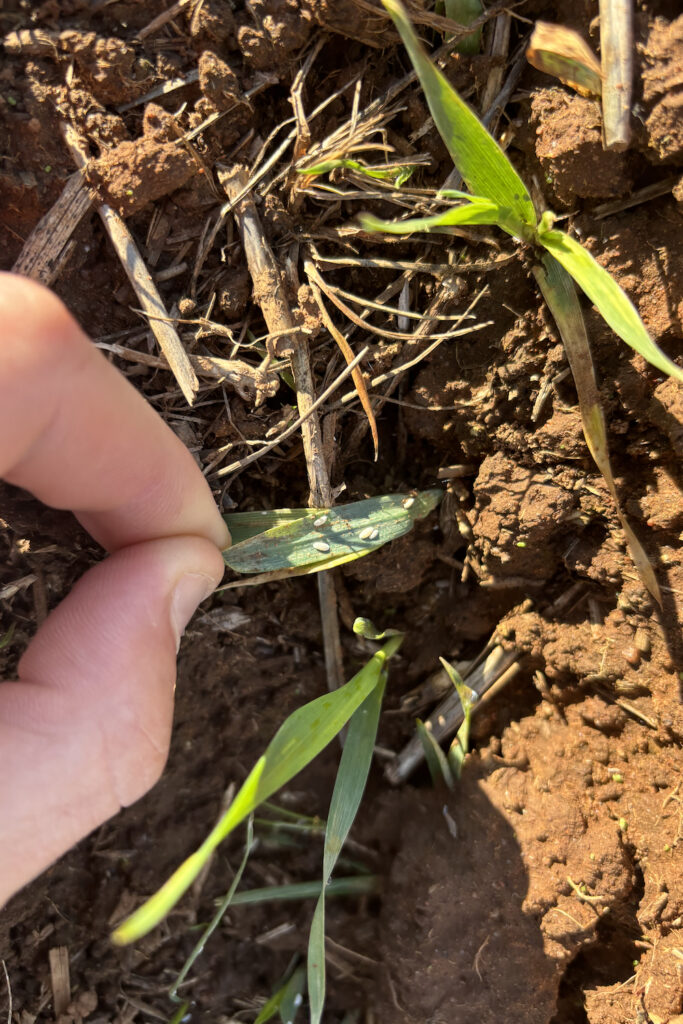
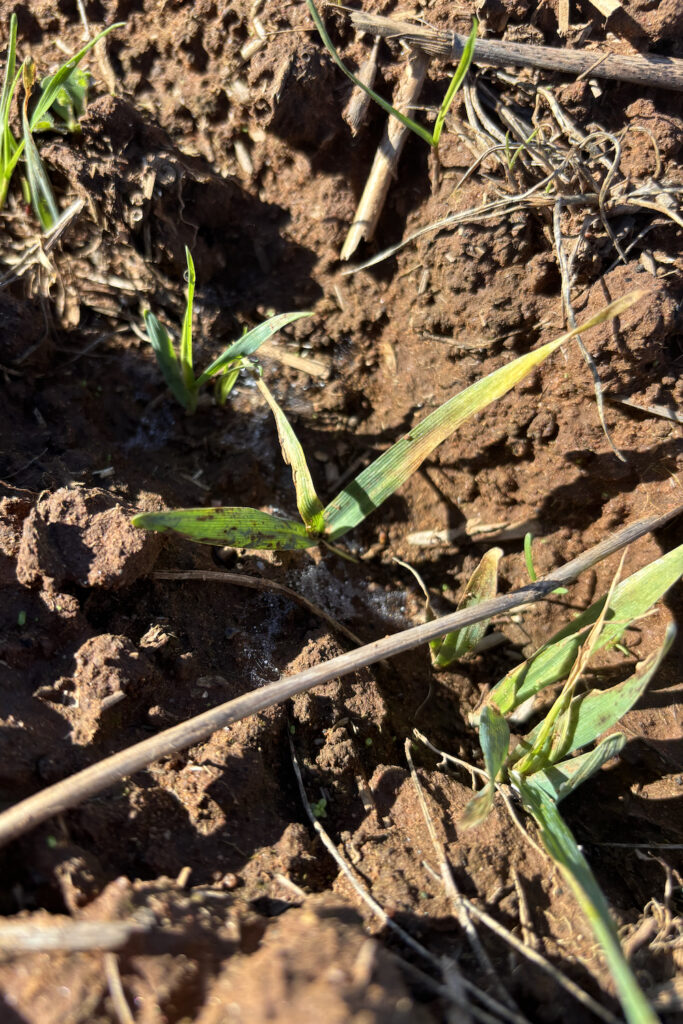
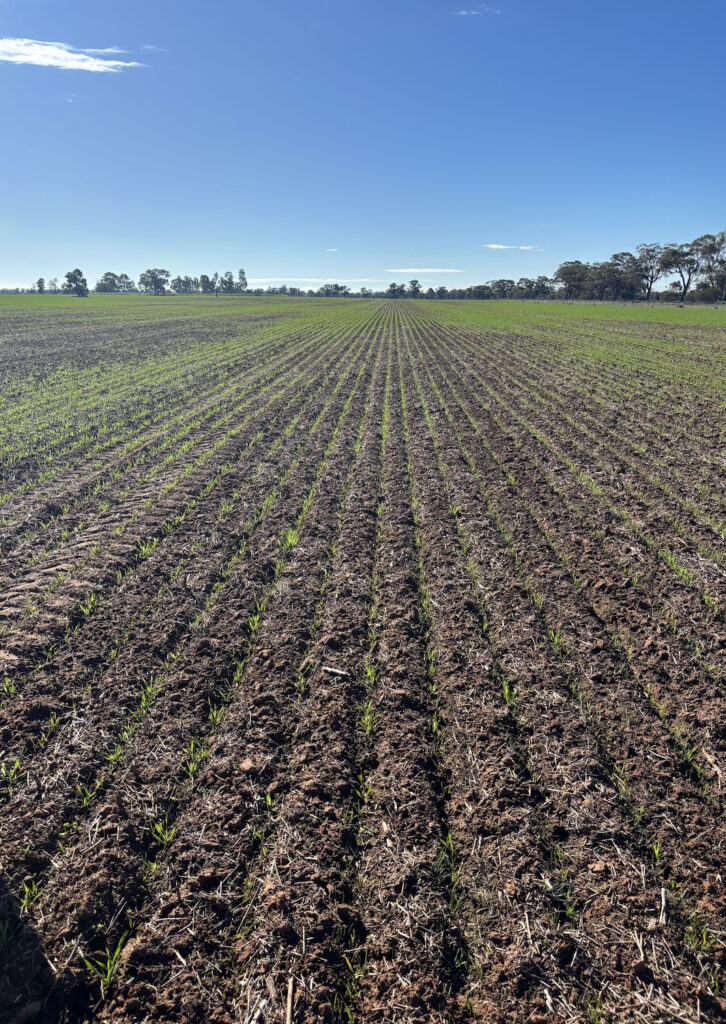
A species of mealybug has been reported impacting barley crops in several paddocks around Deniliquin in the NSW Riverina, as well as two paddocks in Leitchville and Pyramid Hill in the Victorian Northern Country. In affected crops, high numbers of mealybugs were found on the roots and lower foliage and stems of young plants. Damage symptoms included stunting, yellowing leaves and impaired root development, and some plants have not recovered from the damage.
What are these mealybugs?
Mealybugs are small, sap-sucking insects, similar to aphids. They are about 1–3 mm long, with an oval-shaped body coated in a waxy, powdery substance. They have small legs that allow them to crawl in both the adult and immature stages.
Based on the host, the species found in these crops this year could be the ryegrass mealybug (Phenacoccus graminicola); however, we are currently investigating whether we can identify a sample with more certainty using molecular diagnostics.
What’s led to these incidences of mealybugs?
Reports to Pestfacts Southeastern of mealybug damage are rare, with the last report dating back to 2015. We don’t know enough about mealybugs in grain crops to know what might have led to an increase in mealybug reports in some areas this season, and the conditions behind these infestations remain unclear.
It is thought that grasses and cereal volunteers in summer/autumn green bridges can harbour mealybugs, and in at least two of the barley paddocks with mealybugs this season, barley grass was nearby. However, in the last mealybug report to our service in 2015, no green bridge nearby was identified as the source of a heavy infestation across three barley paddocks.
Management considerations
Drawing on how mealybugs are managed in cotton farming, the best approach to management is to focus on (1) good farm hygiene measures, and (2) nurturing beneficial populations.
Implementing farm hygiene measures will be important to limit the spread of mealybugs to other parts of the farm (e.g. movement of people and machinery). This can be achieved by practising Come Clean, Go Clean principles.
There are no registered products for control of mealybugs in barley, and we don’t recommend attempting to target them with insecticides. The waxy, powdery coating on the mealybug’s body provides a level of protection, and they often shelter in leaf folds or around plant roots, making it difficult to achieve adequate spray exposure; products with systemic activity may also fail to control mealybugs if there is no downward movement of the active ingredient to the lower plant area and roots where they cluster.
Withholding broad-spectrum insecticide sprays is also important, as various natural enemies feed on mealybugs. Reports from the northern cropping region indicate that natural enemies, such as lacewings and ladybird beetles, can be very effective in reducing mealybug populations.
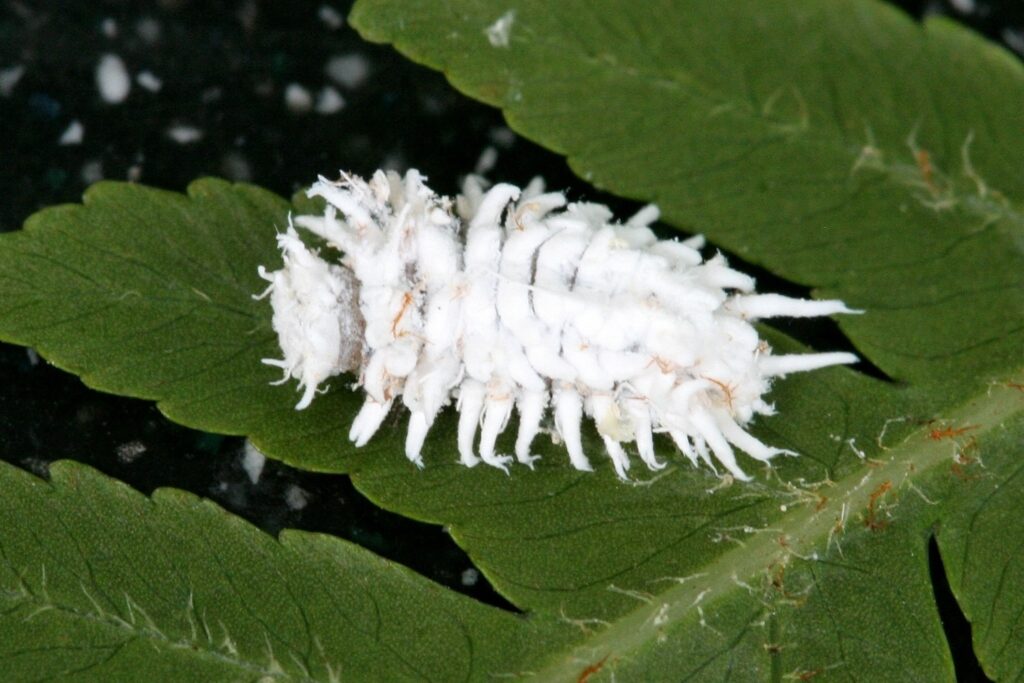
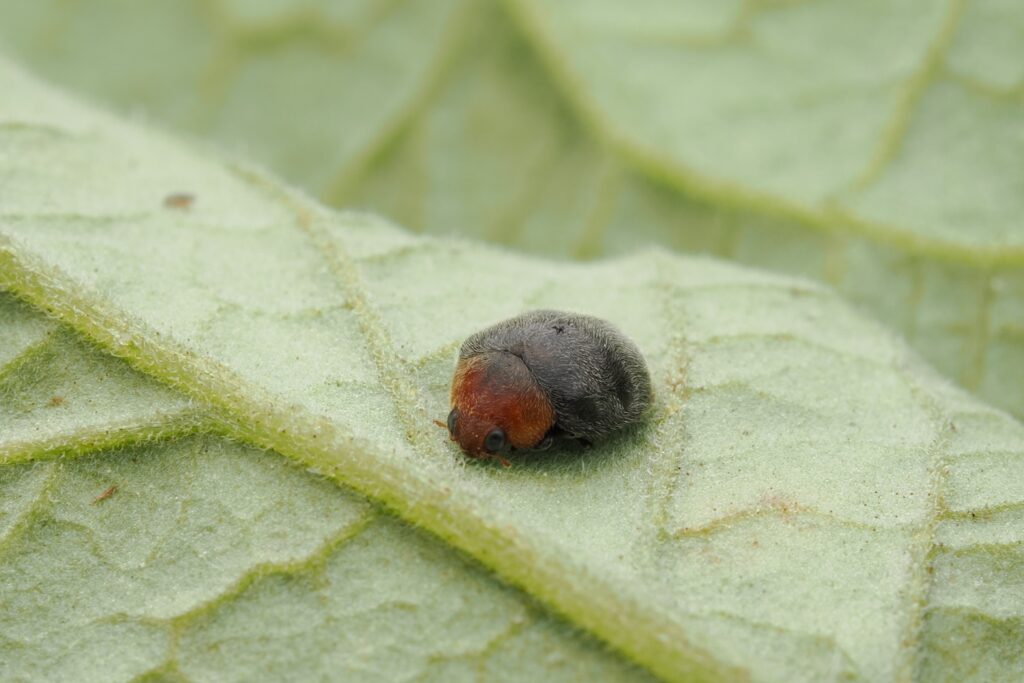
A native ladybird species, sometimes referred to as the ‘mealybug destroyer’, Cryptolaemus montrouzieri, has been shown to feed on Phenacoccus spp. and both larvae and adults are predatory. The larvae look like a larger mealybug, covered in waxy filaments, while adult Cryptolaemus montrouzieri are small, dark beetles with orange colouration on and around the head.
Acknowledgements
This article was authored by Julia Severi, with input from Lilia Jenkins, Cesar Australia. Thanks to Dr Melina Miles, QLD DPI, and content published in the Beatsheet for information on mealybugs.
Thanks to Matt Tubb, Nutrien Ag Solutions, for providing a mealybug sample.
Cover image: Photo by Julia Severi, Cesar Australia